
Acrylic chairs, stools and benches with a load rating you can specify
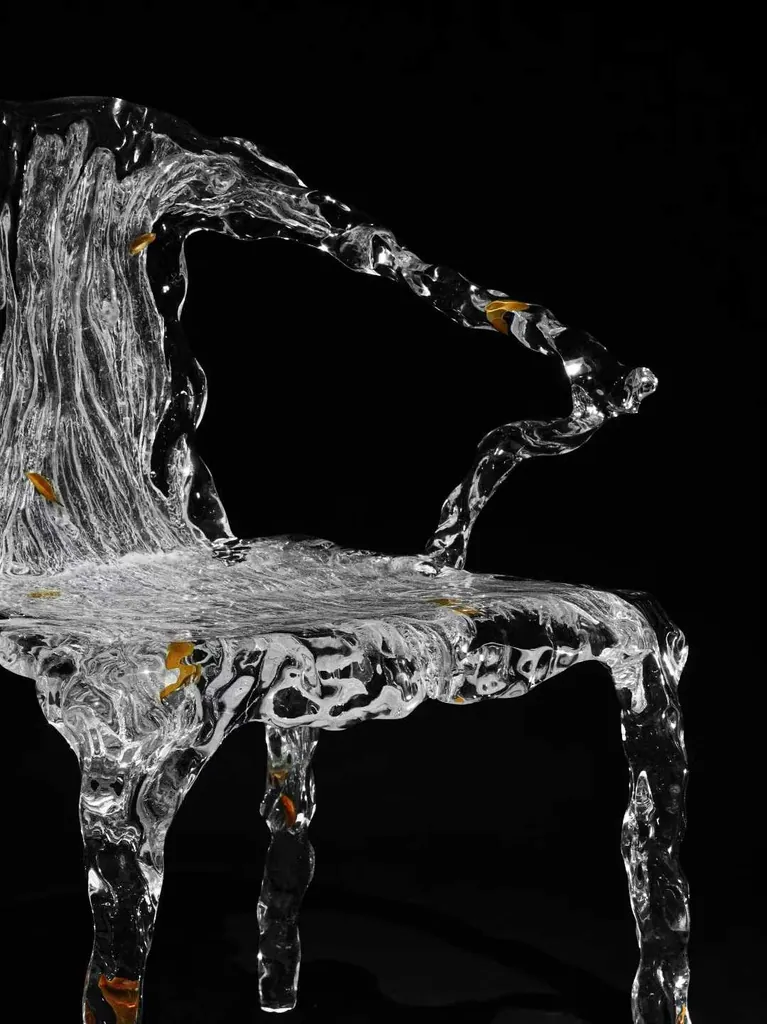
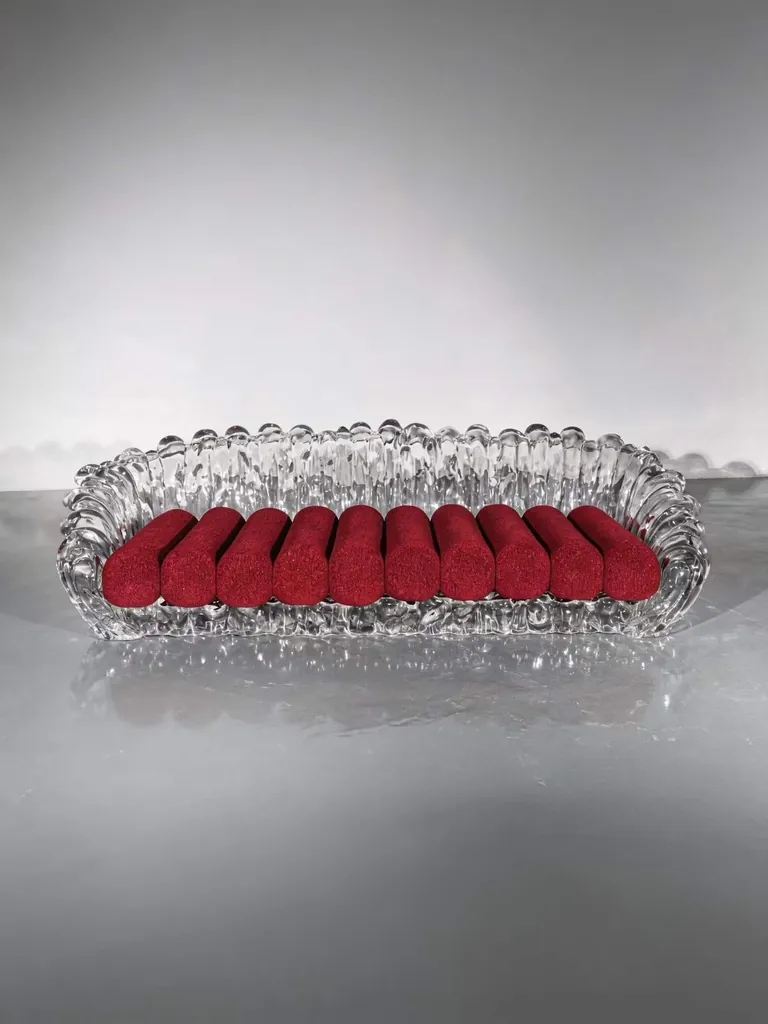
We are a cast acrylic chair manufacturer, working in solid PMMA. Seating is carved from block or molded as a shell, then sanded and hand polished. Armchairs, side chairs, counter and bar stools, benches and sofa bases are all built to drawing, bare or upholstered.

What seating do you build?
Five families, all in the same material. Each one can be left clear, tinted, frosted or carved.
The catalog lists 24 chair and armchair designs, 470mm to 1,040mm wide and 600mm to 900mm high, and 21 stools. Twenty of the stools stand 395mm to 450mm high; the bar stool has a 750mm seat, and the two benches run 2,000mm long.
| Type | Usual seat height | Built as |
|---|---|---|
| Dining and side chairs | 450mm to 470mm | Carved frame, optional upholstered pad |
| Armchairs and throne chairs | 430mm to 460mm | Carved block or one-piece shell |
| Counter stools | 640mm to 680mm | Carved seat on a column or chrome swivel base |
| Bar stools | 750mm to 790mm | Carved seat, footrest, column base |
| Benches and sofa bases | 420mm to 450mm | Carved wave or block base, cushions to match |
Seat height is the number people forget. A counter and a bar are not the same height, and a chair built for one looks wrong at the other. Send the finished floor level and the counter height, not the drawing height, if the site is already built.

How much weight will an acrylic chair take?
Enough for normal use, and we will build to a number if you give us one. Contract seating is usually specified against a recognized test standard, for example the BIFMA or EN series, which set a static load and a cyclic load the chair has to survive. Those are published standards, not our own test reports, and we will say so on any document we send you.
Our own design check is a calculation, not a lab test: every chair and stool is worked out against a dynamic load of at least 150kg (about 330lb), and seating for hotels and other public areas is designed for a 200kg static load.
What we control is the section. The failure point in acrylic seating is never the middle of a leg, it is a thin corner where the grain of the cut meets a stress riser. So we thicken the transition between seat and leg, radius the inside corners, and anneal after bonding. Tell us the intended use, hotel lobby or private dining room, and the section changes to match. The designs that need the most care are cantilever chairs and thin-legged chairs with a steeply raked back, where the seat-to-back corner works as a lever every time someone leans back.
Carved or molded, which one suits the piece?
Carved pieces start as a solid cast block and can lose 40% to 50% of it to the cutter. That is how you get a deep ice texture and a thick, refractive leg. It costs more material and more machine hours.
Molded shells are lighter, faster and better for a set of matching chairs. The white one-piece armchair below is a molded shell; the flame-back throne chair is carved. Both come out of the same workshop and you can see both routes in the cast acrylic manufacturing process.


What upholstery can go on it?
Foam pads in leather, velvet or your own fabric, fixed with concealed pads so nothing shows through the clear frame. Send a meter of the fabric you intend to use and we will build the sample with it. If the fabric has to be sourced locally for a contract project, we can build the seat to accept it and let your upholsterer finish on site.
Seating in rooms


Chairs are usually ordered with a table. See cast acrylic dining tables we make, or how the same seating is specified for contract use in acrylic furniture for hotel interiors.
Questions we get before an order
Can I order a single chair?
Yes. One piece is our minimum, and a single armchair for one room is a normal order.
Do the chairs stack?
Molded shells can be built to stack. Carved chairs do not stack, because the shape that makes them interesting is also what stops them nesting.
Will the legs scratch a stone floor?
Acrylic is softer than stone, so the chair loses before the floor does. Felt or nylon glides are fitted as standard and are worth replacing once a year in heavy use.
How do I repair a scratch?
Fine abrasive paper followed by plastic polish, working outward from the mark. This is one of the real advantages over glass, and we send the procedure with contract orders.
How long does a set take?
Samples in about five days, production in about twenty after sign-off. A large matching set may run longer, and we say so before you order rather than after.
How is an acrylic chair priced?
Each design is quoted from its drawing. Material and hand work are most of the cost: on a carved piece the cast block is 45% to 50% and sanding and polishing 25% to 30%. A dished seat or a carved arm turns 40% to 50% of the block into chips that cannot be reused. A frosted or textured finish on the parts hands touch saves 30% to 40% of the polishing hours. More on the cost split of carved acrylic.
Which finish works best on an acrylic chair?
Arms and seat edges are touched all day, so they look best carved or frosted, which hides fine marks. Keep gloss for legs and backs that are mostly seen. Any face can be clear, frosted, tinted or carved, and a tint is matched to a physical swatch on the sample.
Send the seat height and the use
With a drawing or a reference photo, the counter height and where the chair will live, we can quote the build and the finish.