
One material, carved into furniture that reads as sculpture
Sculptural cast acrylic furniture is solid PMMA that has been carved rather than assembled. We cut ice-crack, frozen splash and leaf-vein surfaces into cast blocks and slabs, then sand and polish them by hand. The result is one continuous piece of clear or tinted material with no visible frame.

What is sculptural furniture?
Sculptural furniture is furniture whose form carries the piece, not its decoration. A leg is not a tube with a foot on it. It is a shape cut out of the same block as the top, so light passes through the whole thing at once.
Acrylic suits this better than most materials because it is optically clear and it machines. A carved facet in cast PMMA keeps its edge. Under a lamp, the cut faces act like the inside of an ice block, and the piece changes with the light in the room through the day.
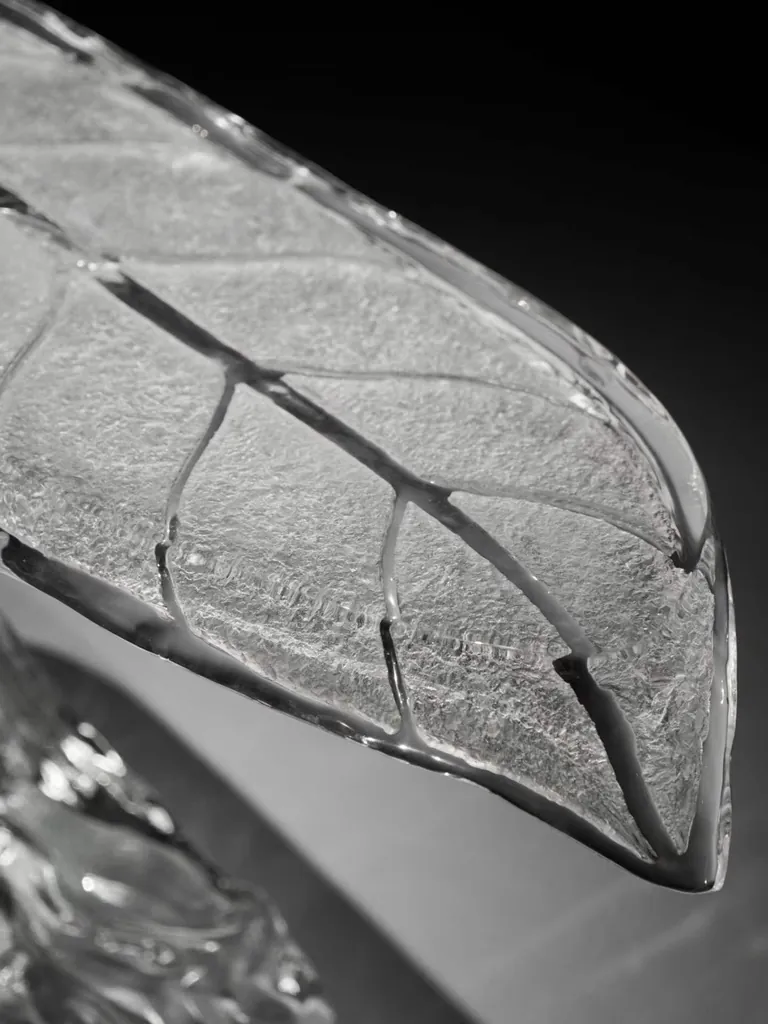
Three surfaces run through the range. Ice-crack is the deepest and the most common. Frozen splash freezes a pour in mid-air, usually on a table base or a bathtub rim. Leaf-vein is shallower, cut into chair backs and panels where the piece has to stay comfortable against a body.


What is in the range?
Four groups, in the order most projects order them.


Acrylic chairs and stools
Armchairs, side chairs, bar and counter stools, benches, upholstered or bare.


Acrylic sculpture and art pieces
Trees, rockery, animals, figures, relief panels and hanging installations.
How are backlit counters and islands built?
The light goes into the slab, not behind it. A backlit cast acrylic bar top is carved on the upper face, left flat underneath, and lit from the edge or from a shallow cavity in the plinth. The carved face scatters the light, so the surface glows where the texture is deepest instead of showing a row of bright spots.
Two things decide whether it looks even: the distance between the LED strip and the acrylic, and how diffuse the underside is. We set both during the sample stage, with your strip, your color temperature and your RGB controller if you already have one. This is solid cast acrylic and it is not acrylic solid surface, the mineral filled sheet material sold for countertops. Most of these go into bars and lounges, which is covered in acrylic furniture for hotel interiors.


Switch the light off and a tinted slab keeps its color; switch it on and it glows from the base. The color of the light comes from the strip and the controller, so the same counter can run blue one night and green the next.


How durable is acrylic furniture?
Solid cast acrylic does not chip like glass and it does not rust. It is softer than glass, so it scratches, and a scratch in acrylic can be sanded and polished out on site. That is the honest trade. A piece that would be scrap in glass is usually repairable here.
Thickness does the structural work. A dining top carries its load as a slab, so we size the thickness to the span rather than adding a frame under it. Cleaning is the other half: a soft cloth and a mild detergent, never an ammonia based glass cleaner, which attacks the surface. Whether the material yellows is a separate question, answered in the guide on acrylic furniture and yellowing.
Is acrylic furniture still in style?
The clear ghost chair look peaked years ago and it is not what we build. What has stayed is the sculptural end of the material, where acrylic is used for its depth and refraction rather than for being invisible. Tinted blocks, deep carving and lit surfaces are where the current work sits.
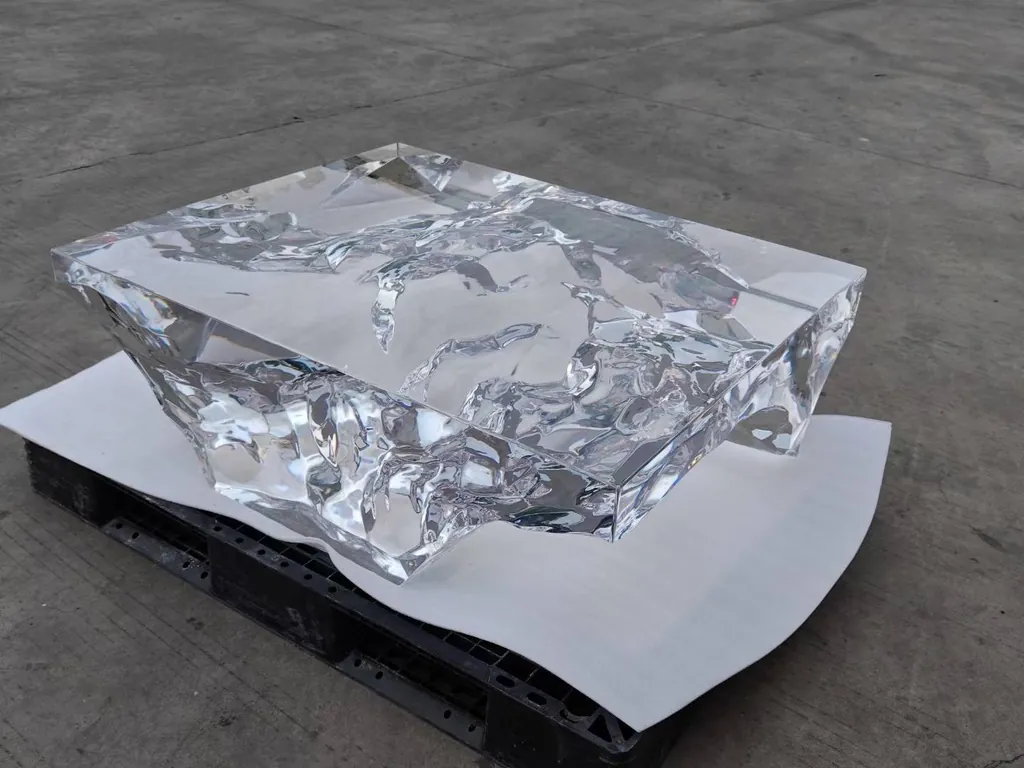
You can see the raw material this comes from, in blocks and slabs, before anything is cut from it.

Questions buyers ask about the range
Can you build to my drawing rather than to a catalog?
Yes. Almost everything we make starts from a drawing, a sketch or a photograph. We come back with the sizes we would build to, the acrylic thickness, the tint and the finished weight before anything is cut.
What is the minimum order?
One piece. A single table or one lobby sculpture is a normal order for us.
How long does it take?
Samples take about five days. Production takes about twenty days after the drawing is signed off. Large matching sets can run longer, and we say so before you order.
Which pieces can be tinted?
Any of them. Tint is added to the cast stock, so the colour runs through the whole piece rather than sitting on the surface. Send a physical swatch if the colour has to match something.
Which finish works best on a backlit counter?
It depends on what the light should do. Ice-crack gives the strongest effect: the light catches every crack, so the counter reads as lit ice. Frosted spreads the light evenly and never glares, which suits a kitchen island people sit at. A tint sets the mood, warm or cool, and keeps its color with the light off. Clear lets the most light through. Many counters combine them: gloss where people look, texture where hands land.
Do you ship outside China?
Yes. Pieces are filmed, foam wrapped and crated to their own shape for sea or air freight, and we give the packing volume with the quote.
Start with a drawing or a photograph
One piece is enough to open an order. Samples take about five days, production about twenty. If you want to see how the carving and polishing is done first, walk through the cast acrylic manufacturing process.