
Guides for the people who have to specify acrylic furniture
Short answers to the questions designers, buyers and contractors ask before they order cast acrylic furniture. Each guide sticks to what can be shown or sourced: material behavior, machining limits and the decisions that have to be made before cutting. Sources are named and dated.
Material behavior and durability
- Why some acrylic furniture yellows and some does not
Acrylic furniture made from virgin cast PMMA does not noticeably yellow indoors. PMMA is one of the few clear plastics that resists ultraviolet light without an added stabilizer. Yellowing almost always points to something else: recycled content, a cheaper plastic sold as acrylic, heat damage, or a solvent used in cleaning.
Choosing the right acrylic
- How thick a cast acrylic table top should be, and what it will weigh
A solid cast acrylic table top is usually 30mm to 50mm thick for a round table of 1200mm to 1500mm, 40mm to 60mm for a dining table of 1800mm to 2400mm, and 50mm or more beyond that. Low tables run 20mm to 40mm. The span between supports sets the number, not the look.
- Cast or extruded acrylic: which one belongs in furniture
Cast acrylic is polymerized in a mold, cell by cell. Extruded acrylic is melted and pushed through a die as a continuous sheet. For furniture the difference decides everything: cast material machines and polishes cleanly at furniture thickness, while extruded sheet is thinner, cheaper and prone to crazing at cut edges.
Buying and running a project
- What an acrylic furniture specification should say, line by line
An acrylic furniture specification should state seven things: the material (virgin cast PMMA), the thickness of every load-bearing part, the surface finish, where the joints go, the base and fixings, the packing, and how the sample and the delivered piece will be checked. Each line closes a gap a factory would otherwise fill with its own cheapest choice.
- What you are paying for in a piece of solid acrylic furniture
Solid acrylic furniture is expensive because of weight, waste and hand work. A furniture-grade top is a heavy slab of cast PMMA, carving turns much of that block into chips, and every face is then sanded and polished by hand. Thickness and carving depth move the price far more than the size of the piece.
- One piece, five days, then 20: how a custom acrylic order runs
Our minimum order quantity (MOQ) for custom acrylic furniture is one piece, carved or molded. Lead time is about five days for a sample and about 20 days for production after you sign off the drawing and the sample, crating included. Only freight comes on top, and its length depends on your port and on sea or air.
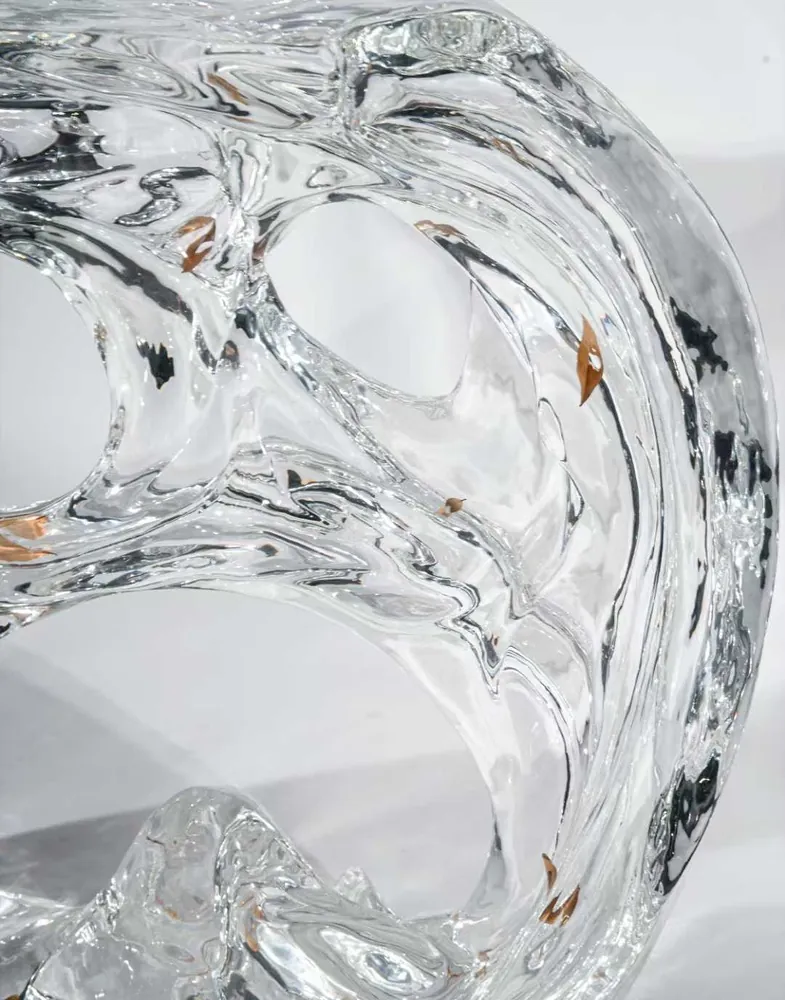
Does Acrylic Furniture Turn Yellow? Cast PMMA Facts
Why some acrylic yellows and some does not, what regrind has to do with it, and how to tell before you buy.
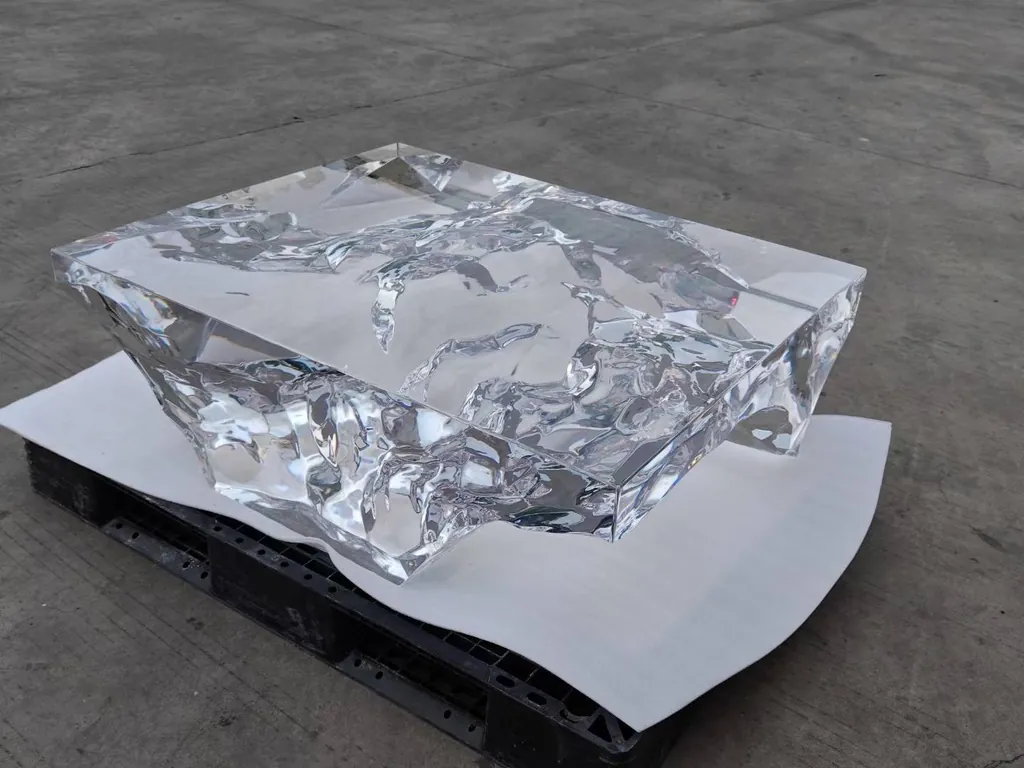
Cast vs Extruded Acrylic: What Furniture Needs
The two are not interchangeable once a part gets thick. Where each one belongs, and where each one fails.
More guides are being written, on cleaning without scratching, on acrylic against glass, and on what drives the cost of a custom piece. In the meantime, the workshop side of these questions is answered in the cast acrylic manufacturing process.
Which guide answers which question?
- Will it stay clear? The yellowing guide covers virgin cast PMMA, regrind and the four things that actually discolor a piece.
- Cast or extruded? The material guide compares the two at furniture thickness, where the difference decides whether a joint survives.
- How is it built? That is not a guide but a page: the cast acrylic manufacturing process, photographed on our own floor.
- What can you make? Start from the sculptural cast acrylic range, or go straight to cast acrylic dining tables we make.
Every guide names its sources with the date they were read. Where we have no test of our own, we say which published standard or manufacturer document a figure comes from, and we do not present it as ours.